Showing the value of oak9 in minutes
oak9 is a DevOps security platform that invests it's resources in product-led growth initiatives
Challenge
In April 2021, just 2 weeks before a scheduled soft launch the design team received a task to design an onboarding flow for first-time sign-up users. Due to a limited timeline, the designed onboarding flow simply followed an existing project creation flow.
This resulted in an alarming drop-off rate that indicated that the onboarding flow had to be redesigned. With more feedback and more time I had to decrease the drop-off rate and provide the value of oak9 to our new customers as fast as possible.
Outcomes
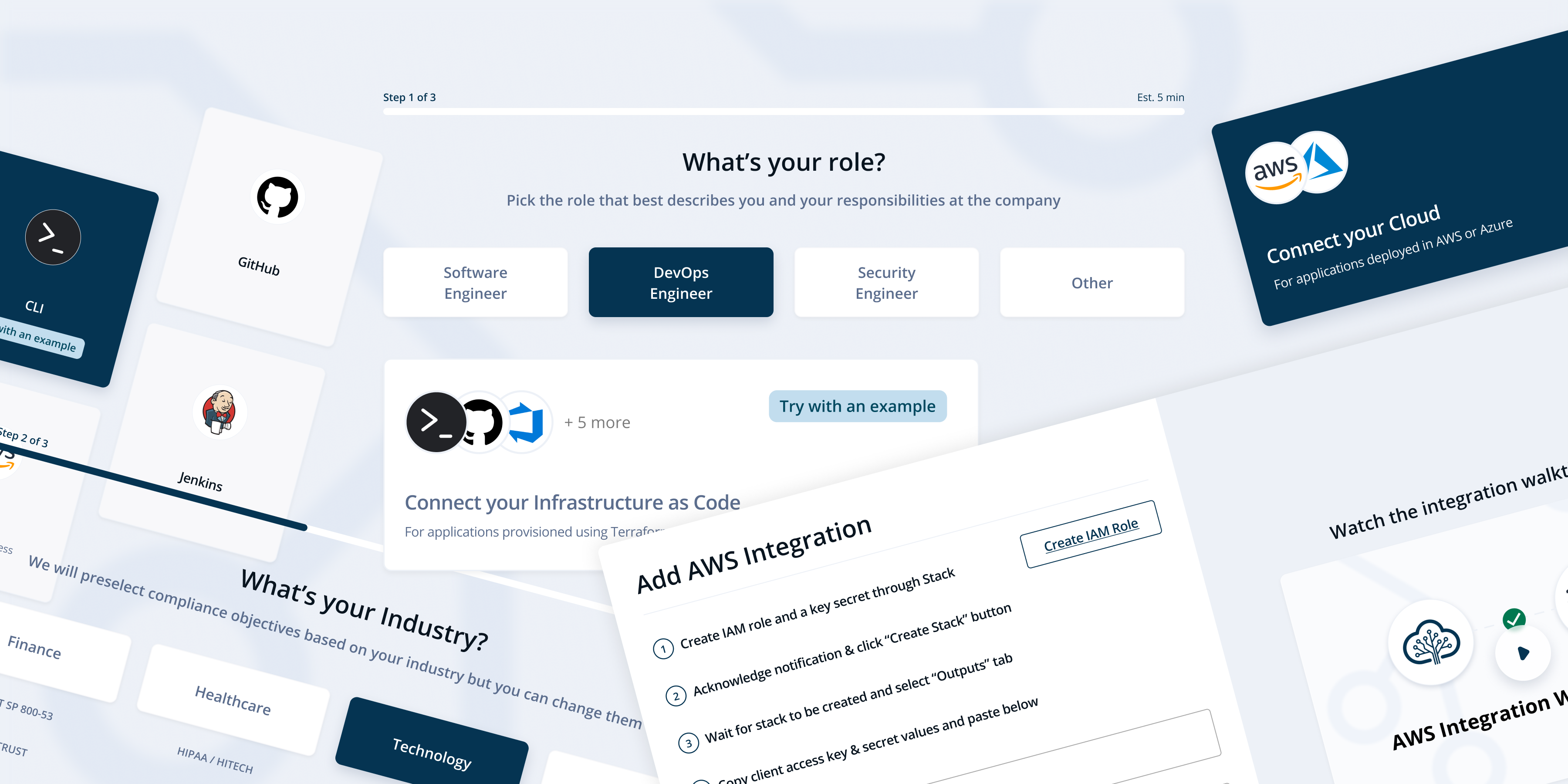
At the end of this project prepared a flow that reduced the time to onboard a user to less than 5 minutes and allowed the company to continue it's endeavour into product-led growth.
The new onboarding flow was built after multiple iterations and received extremely positive from both target users and investors.
See Final DesignLearning From Past Mistakes
Past Onboarding
The previous onboarding consisted of the same questions that the project creation flow, just represented in a different fashion.
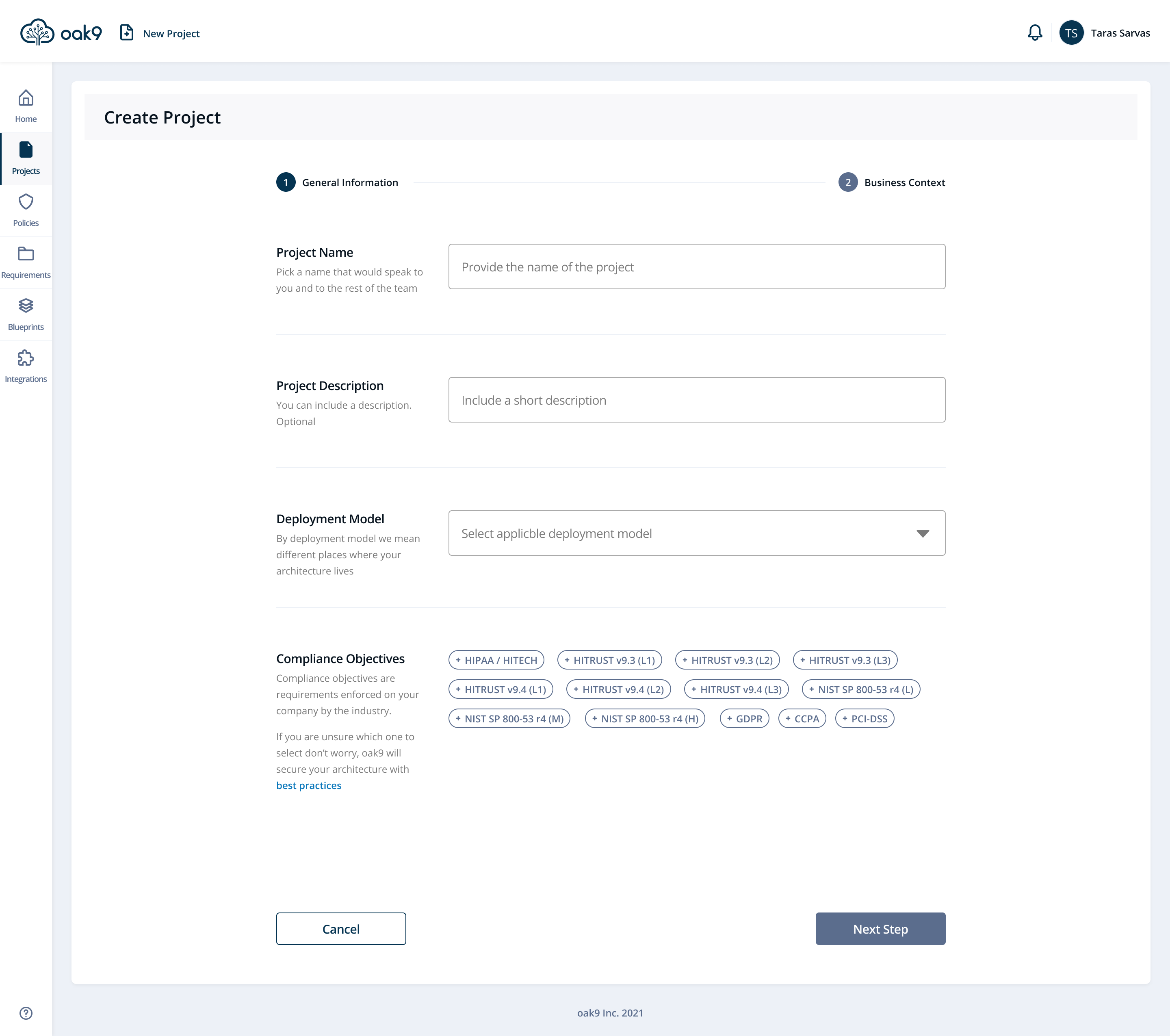
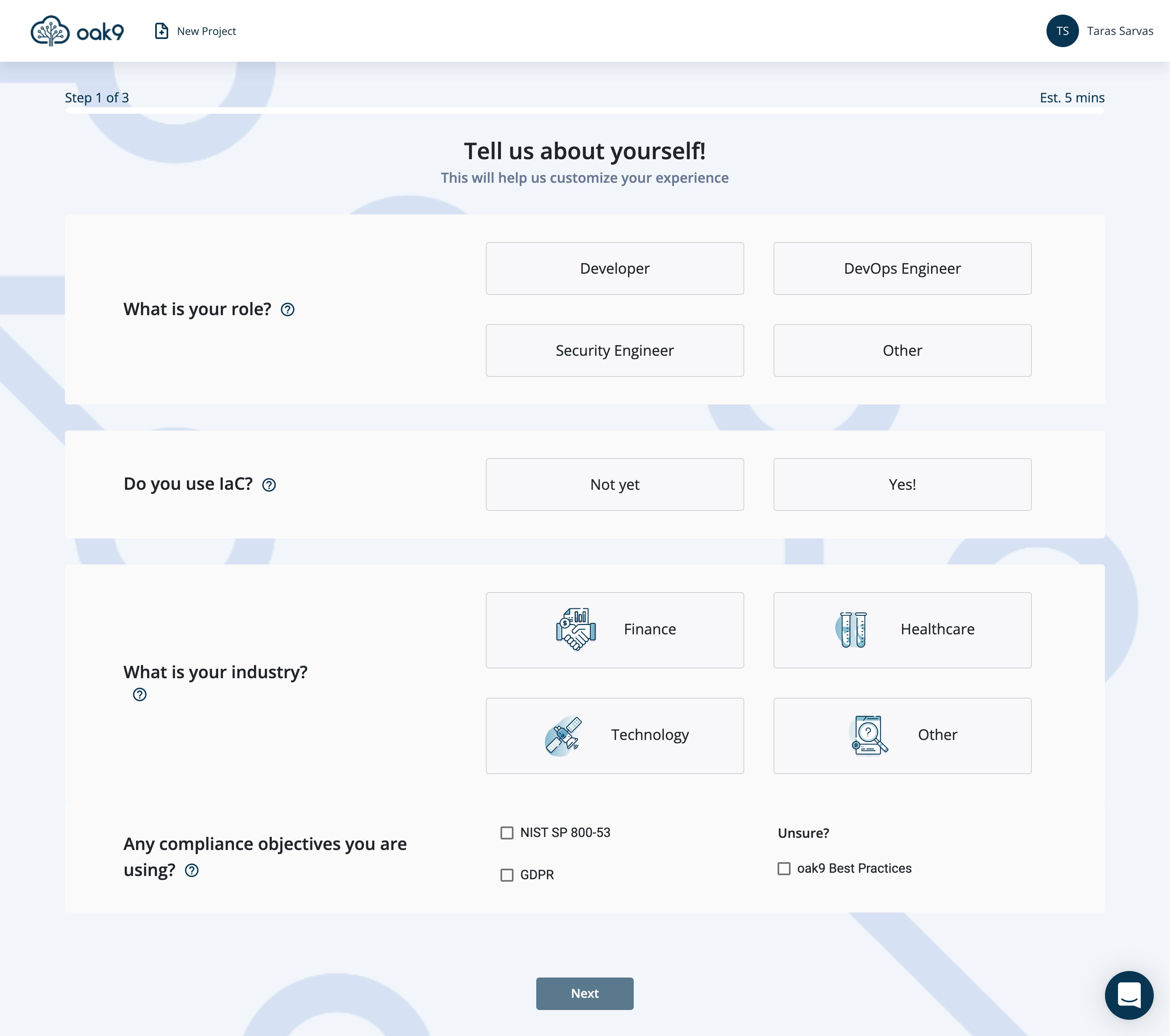
However during the soft launch only 1 in 30 users completed the onboarding process. Considering that every user during the soft launch was part of the oak9 network the result was alarming.
1*
in
30
* All the users during soft launch were part of personal network
Second Iteration
Learnings
Too Many Steps
Users signed up for the platform and wanted to immediately see the value of the product. Asking them more questions was counterproductive.
In the next iteration I removed the list of questions. Instead I made safe assumptions that the user could change later.
Lack of Guidance
Majority of the users though were perpetual intermediates, thus when it came to generating API tokens they have to do some research to complete the task.
I realized that I could remove their frustration by providing the integration instructions directly on our platform.
General Distrust
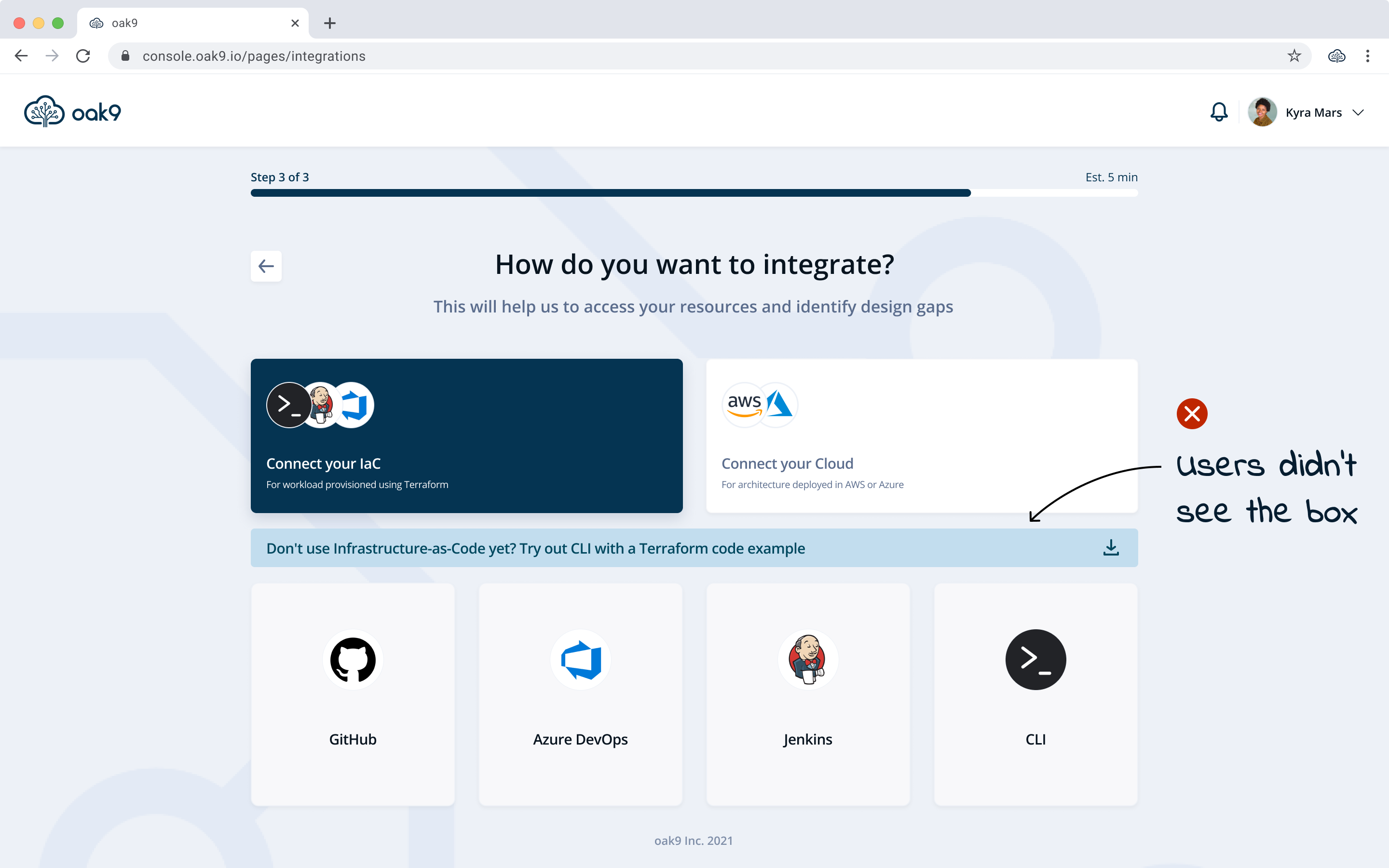
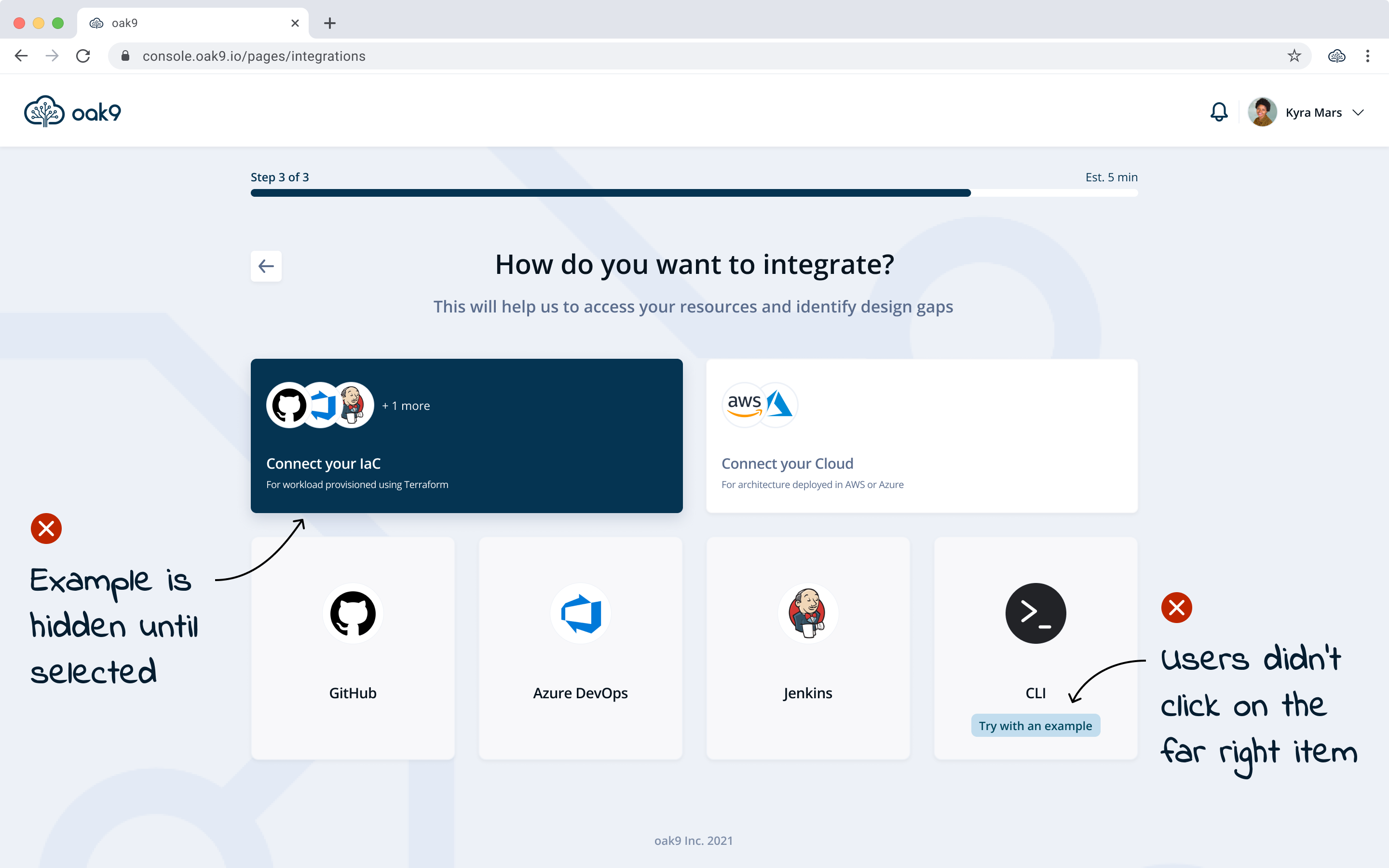
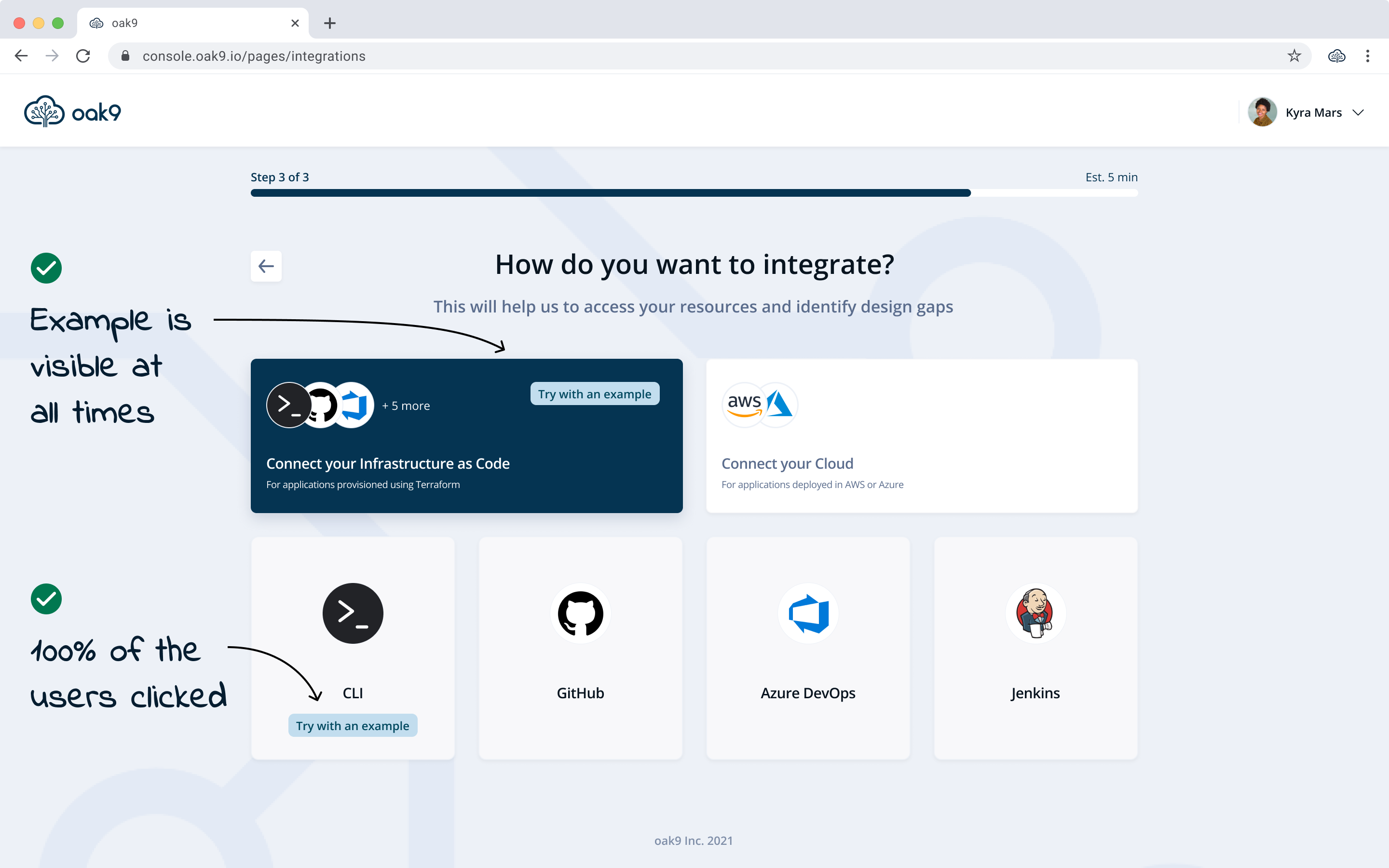
The product team thought users would connect their work cloud architecture. In reality users didn't trust oak9 and didn't want to connect their real architecture.
I decided to provide a worry-free example and clarified that some integrations request a read-only access and thus don't impose any risks.



My Design
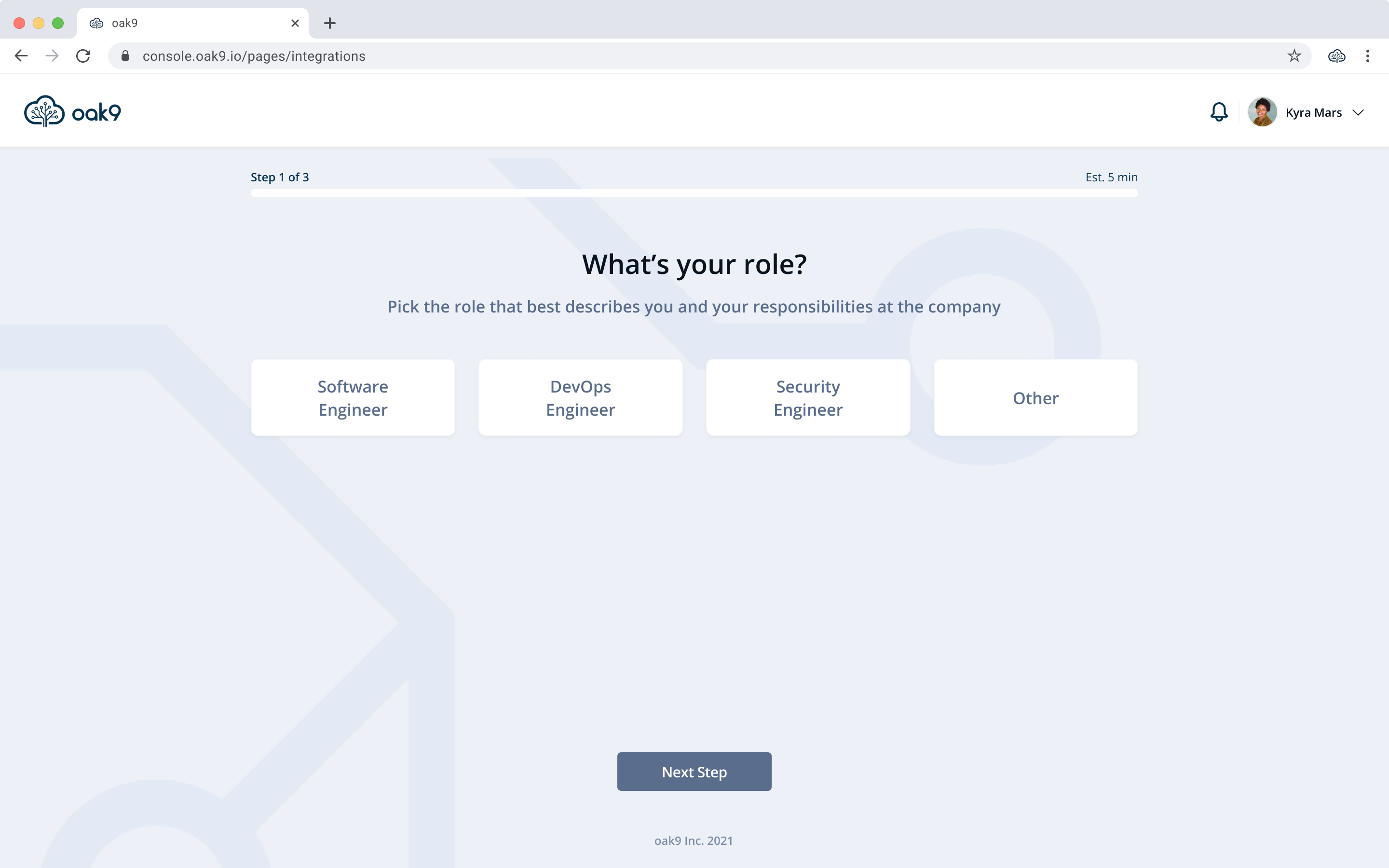
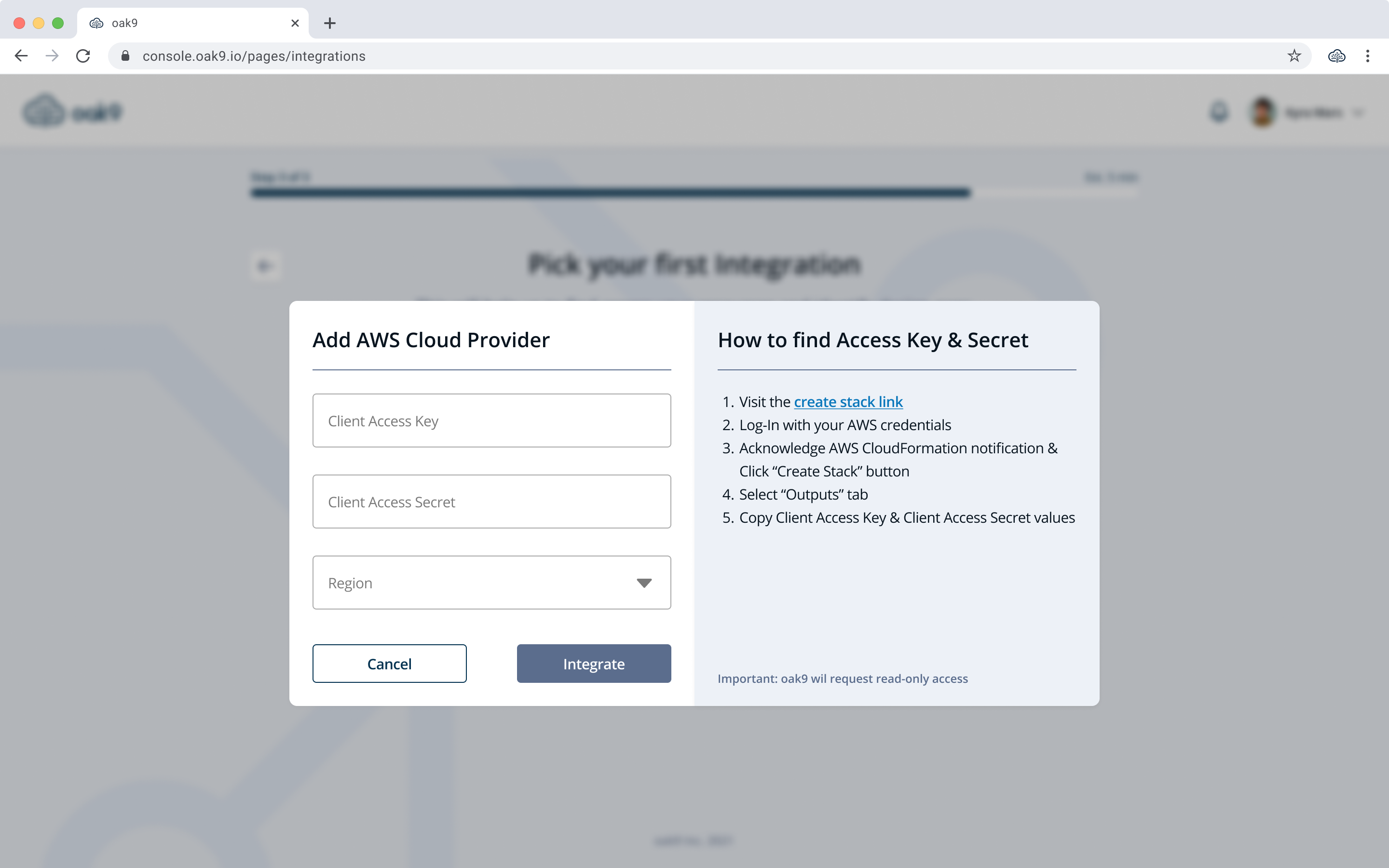
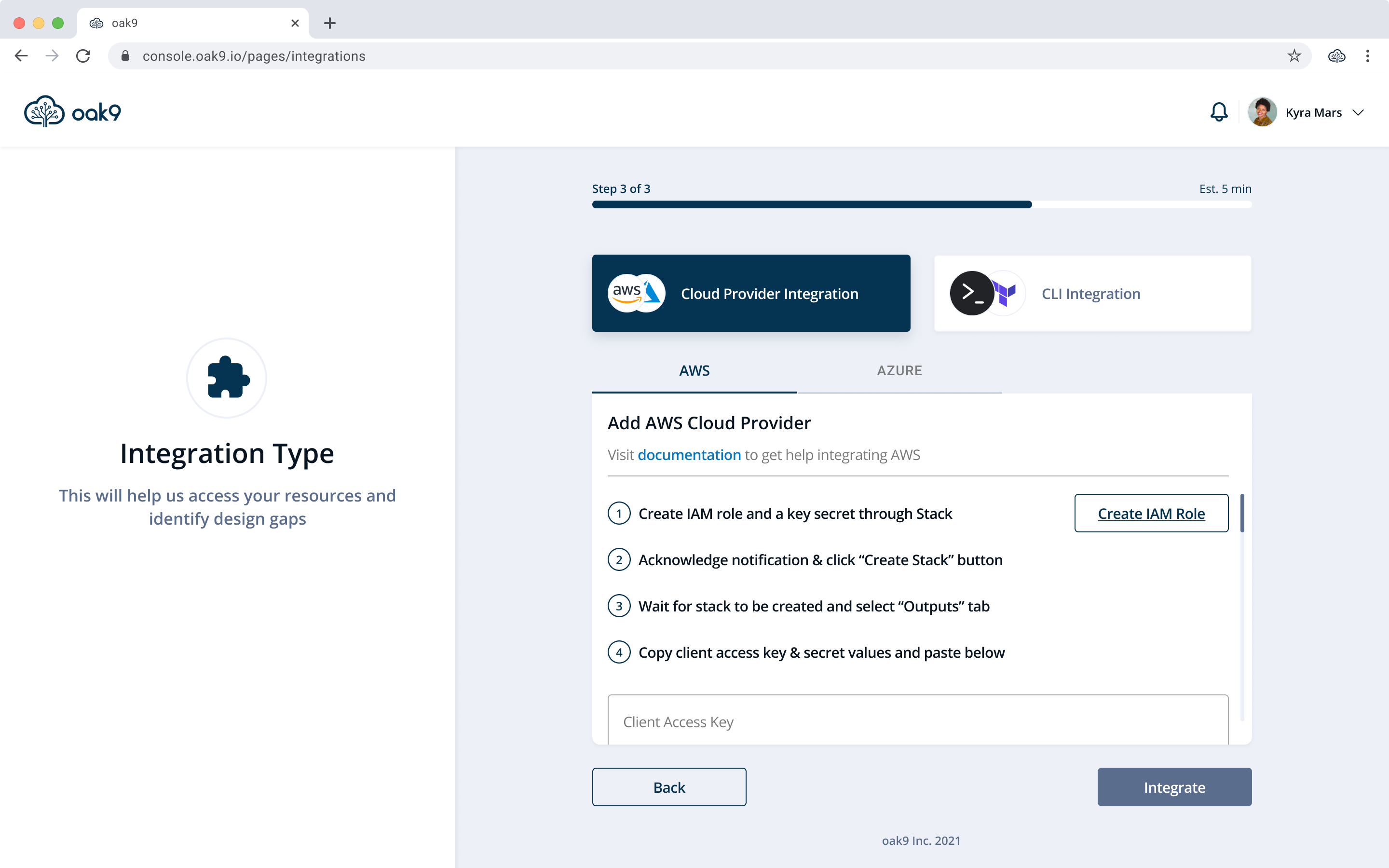
I wanted to show each step of the process in a center-aligned manner with a small supplementary text under the heading. The final step, integrations, would happen in the pop-up menu with instructions displayed on the right side.
Other Design
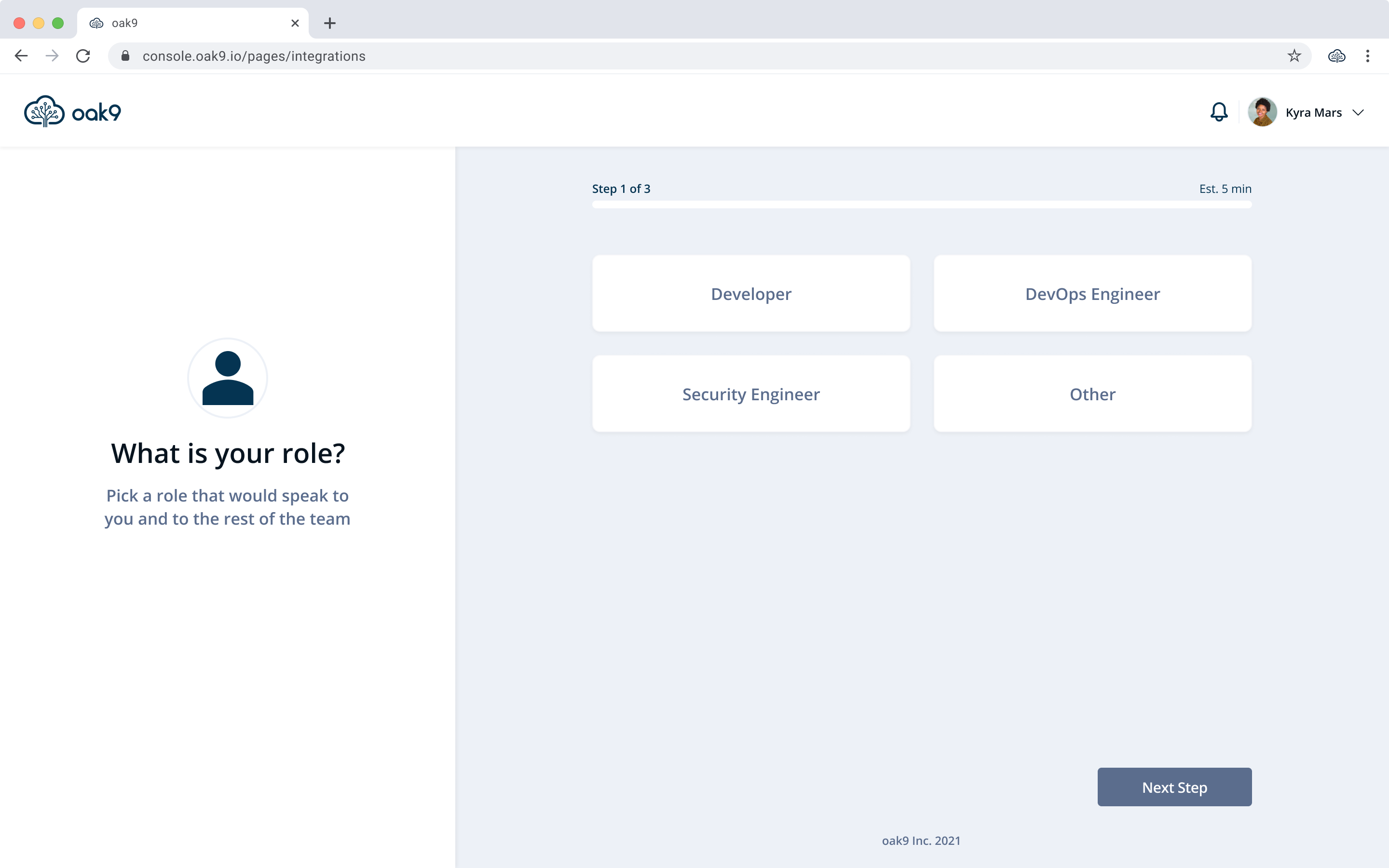
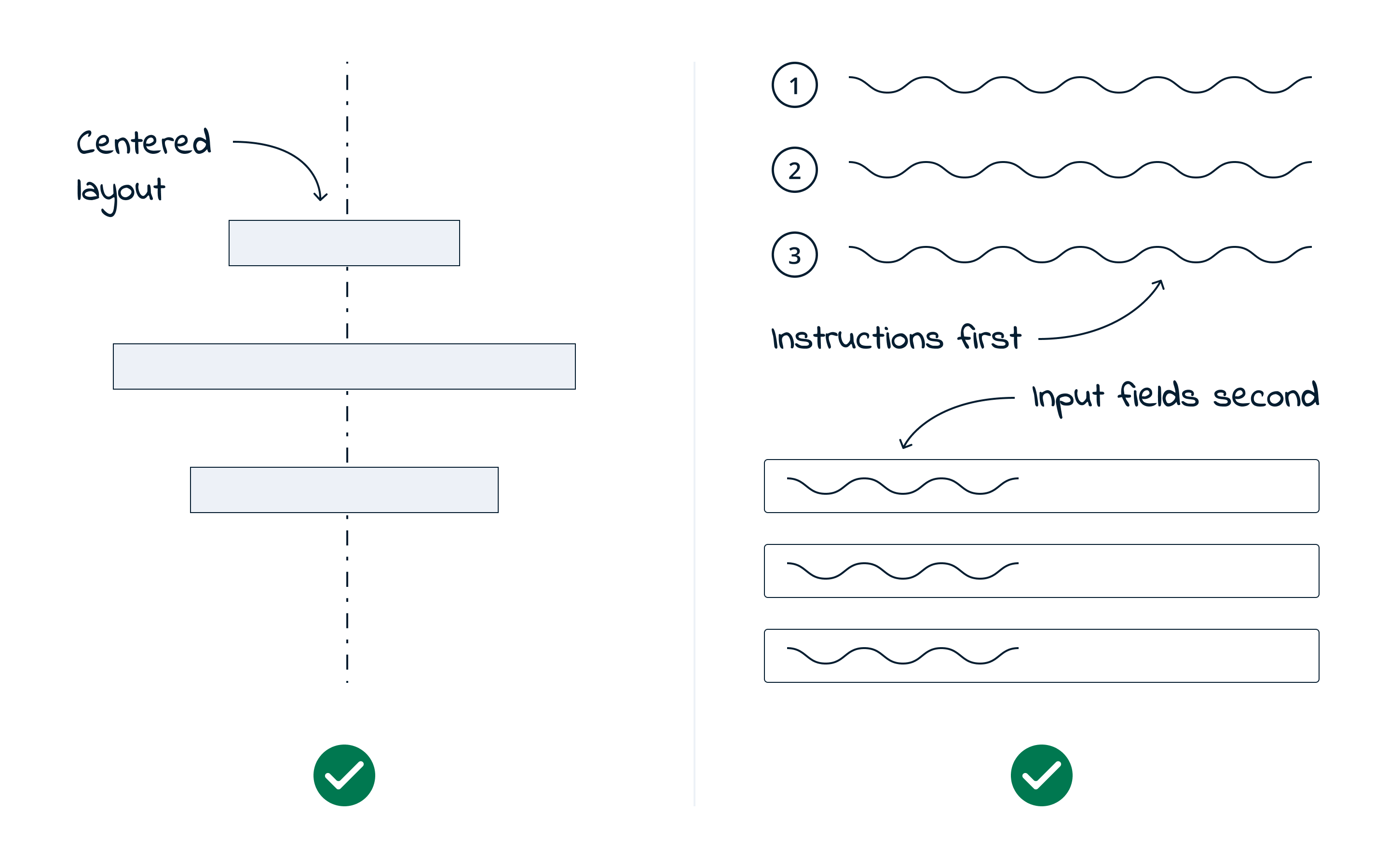
My other designer proposed a split-screen solution, where explanation were displayed on the left side, while the actions were taken on the right side. During the integration the instructions were shown first followed by the input fields.
Gathering Feedback
Users generally loved the straightforwardness and the layout of my design but had a hard time noticing the integration instructions on the right side of the pop-up. In the second iteration users were confused about the split-screen and it took them longer to take each step, but they were able to integrate much faster as the instructions were front and center.
Third Iteration
Future Proof Design
I decided to display oak9's cloud architecture diagram in the canvas space to utilize dedicated real estate. I also analyzed how AWS, Azure, and 3rd party companies display their diagrams to see elements I could use and improve.
New Slide-Up
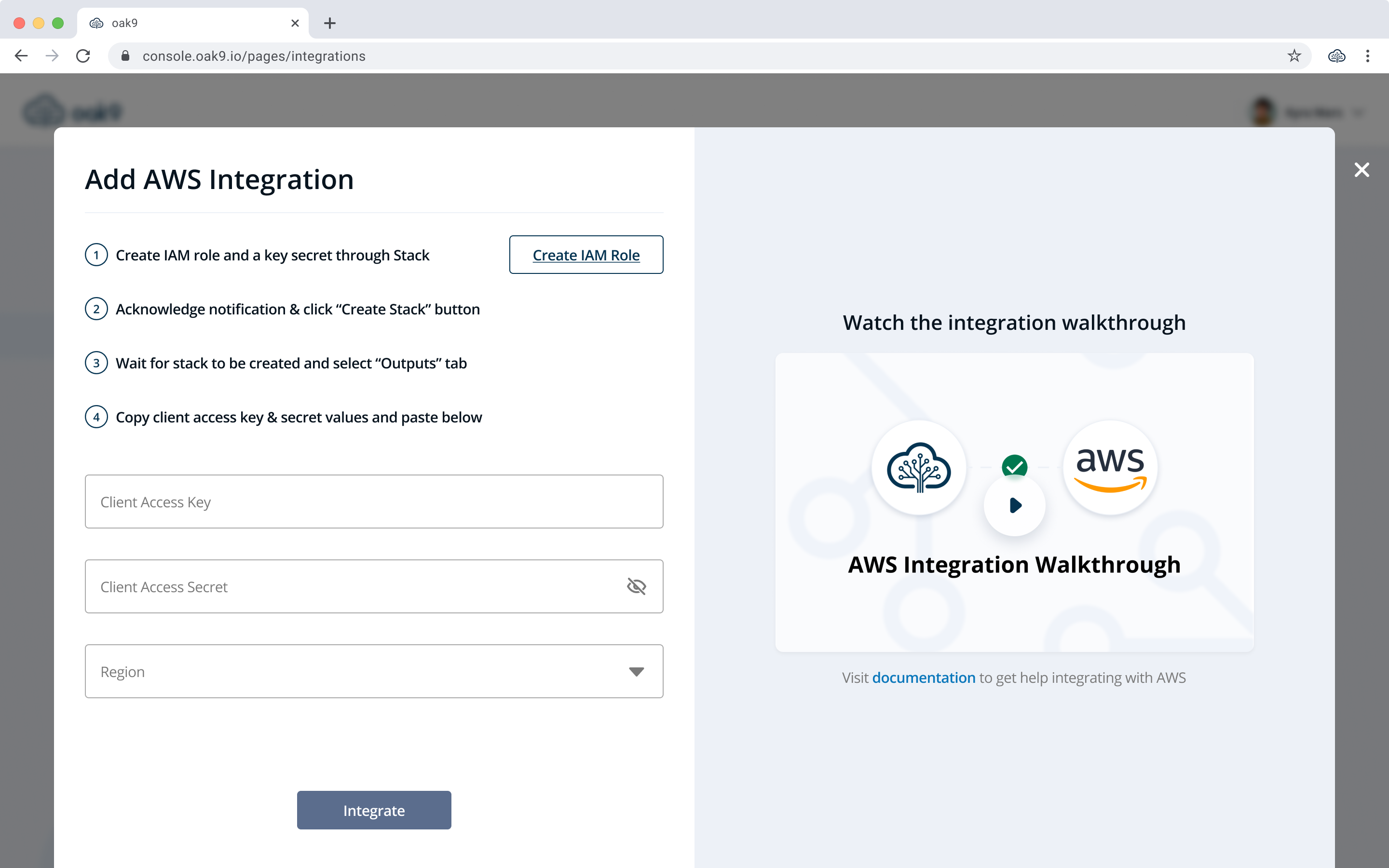
The integration pop-up had to be redesigned. I provided instructions in-line with the field to streamline the process and introduced a video walkthrough as well as the documentation link on the right side of the slide-up.
The slide-up very well received as now every user saw the video and the link but rarely needed them as the instructions were front and center.
Final Onboarding Flow
After multiple iterations I landed on a final onboarding flow.
Final Thoughts
Learnings
Before the start of this project I didn't know anything about product-led growth and how it would help oak9 to grow its user base. However, a self-service sign-up allowed us to save cost rather than hiring a huge sales team (which is deadly for an early-stage start-up) and show the value of oak9 in a matter of minutes.
I learned a lot about streamlining the process (e.g. even a click on the “Next” button can be avoided to speed up the flow) and how the user can drop because of the tinies roadblock.
Lastly, I knew that the project was a success when our main investor praised the new design.